

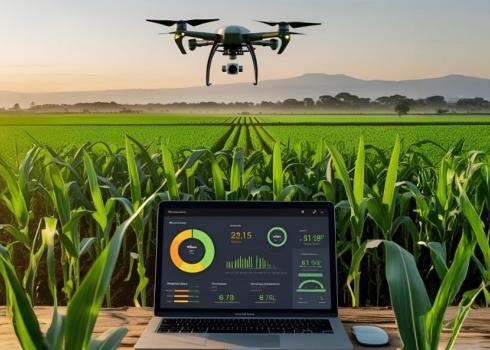
The Agricultural Information Management System (AIMS) is a regional platform designed to enhance access to, analysis of, and use of agricultural data for evidence-based decision-making across the Southern African Development Community (SADC). Developed under STOSAR, it consolidates critical data on crops, livestock, early warning, nutrition, and trade, providing Member States with reliable information to support planning, policy formulation, and regional integration.
Access to timely and reliable agricultural data remains a challenge in many SADC Member States. National systems are often fragmented, formats vary, and coordination across sectors is limited. These gaps hinder the ability of policymakers, researchers, and planners to anticipate and respond effectively to pressing issues. At the same time, the region faces growing demands for accurate information to address climate shocks, food insecurity, and evolving market dynamics.
By promoting standardized data collection and strengthening interoperability among national platforms, AIMS provides a practical solution to these challenges. The data available on the platform is supplied by Member States and validated as official data, ensuring its credibility and reliability. This makes AIMS a critical tool for building agricultural resilience, improving competitiveness, and fostering regional integration. The AIMS platform is accessible online at: https://aimsapp.sadc.int/.
Building on STOSAR I Achievements
STOSAR II is building on the solid foundation established under STOSAR I, which culminated in the official launch of the Agricultural Information Management System (AIMS) in September 2023. This milestone marked a critical step towards strengthening evidence-based decision-making and fostering regional integration in agriculture.
Under STOSAR I, AIMS achieved several significant milestones:
- A regional AIMS strategy was developed and endorsed.
- Twelve thematic modules were designed to cover key agricultural sectors.
- Pilot activities were conducted in selected Member States.
- The Livestock Information Management System (LIMS) was revitalized.
- A regional situation analysis was completed to assess readiness for integration.
Scaling Up Under STOSAR II (2024–2028)
Building on these achievements, the second phase of the project is scaling up AIMS to expand its reach, strengthen its functionality, and ensure long-term sustainability across the SADC region. Targeted activities include:
- Supporting Member States to align national systems with the regional AIMS platform.
- Enhancing dashboards and user interfaces for real-time data visualization.
- Strengthening technical working groups at both national and regional levels.
- Supporting cloud migration to improve system security and accessibility.
- Revitalizing livestock and early warning data systems and integrating them into AIMS.
- Improving data quality, collection tools, and user feedback mechanisms.
These actions are designed to ensure that AIMS evolves into a sustainable, user-friendly platform that empowers governments, researchers, the private sector, and development partners with actionable data for informed planning and policy.
The implementation of AIMS is led by the SADC Secretariat, with technical support from the Food and Agriculture Organization of the United Nations (FAO) and active contributions from Member State technical teams and focal points. This collaborative approach ensures that AIMS benefits from international best practices while fostering regional knowledge exchange and ownership.
As an essential pillar of STOSAR II, AIMS enables evidence-based decision-making that underpins the success of all other components, supporting stronger animal and plant health systems, more inclusive value chains, and improved food and nutrition security across the SADC region.