

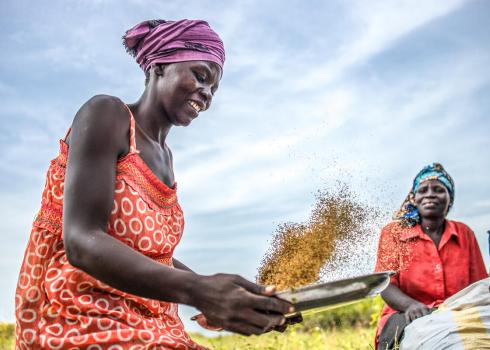
The second phase of the project Support Towards the Operationalization of the SADC Regional Agricultural Policy (STOSAR II) is implemented by the Food and Agriculture Organization of the United Nations (FAO) in partnership with the Southern African Development Community (SADC) and funded by the European Union (EU).
STOSAR II (2025–2028) is a EUR 10 million initiative funded by the EU under the Development of Smart Innovation through Research in Agriculture (DeSIRA) programme. The project builds on the achievements of STOSAR I (2018–2024) to accelerate the transformation of agriculture and food systems across the 16 SADC Member States.
STOSAR II strengthens institutional capacities, promotes regional integration, and advances the implementation of the SADC Regional Agricultural Policy (RAP). It addresses critical challenges such as climate change, pests and diseases, weak value chains, and limited market access, while supporting policy alignment with the Comprehensive African Agricultural Development Programme (CAADP) and the CAADP Strategy 2026–2035 (Kampala Declaration). STOSAR II contributes directly to the attainments of the United Nations Sustainable Development Goals (SDG) 1 (No Poverty), SDG 2 (Zero Hunger), SDG 5 (Gender Equality) and SDG 8 (Decent work end economic growth).
Strategic Objectives
STOSAR II’s strategic objectives seeks support the operationalization of the SADC Regional Agricultural Policy (RAP) by strengthening regional agricultural systems, enhancing market access and trade competitiveness, improving food and nutrition security, and promoting inclusive and sustainable agrifood systems across SADC Member States.
STOSAR II is structured around four thematic areas, that include:
- Agricultural Information Management Systems (AIMS): Strengthening agricultural data systems to support evidence-based policymaking and decision making.
- Market Access - Animal and Plant Health sub-components: Improving compliance with international SPS standards to strengthen animal and plant health systems and facilitate safe regional and international trade.
- Food and Nutrition Security: Strengthening policies, data and coordination to improve food and nutrition security, with a focus on vulnerable populations.
- Value Chains: Promoting inclusive, innovative and sustainable agricultural value chains, with a focus on women, youth and improved market access.
Through these interventions, STOSAR II reinforces regional cooperation, supports policy implementation and contributes to the transformation of agriculture and food systems in Southern Africa, in line with SADC regional development objectives. These actions aim to expand trade opportunities through safe, high-quality products that reflect agroecological and human rights-based approaches.
By complementing ongoing efforts by SADC, FAO, and the EU, STOSAR II contributes to the transition toward efficient, inclusive, resilient, and sustainable agri-food systems, supporting better production, better nutrition, a better environment, and a better life.
Where We Work
The STOSAR II Project is implemented across the Southern African Development Community (SADC) region in partnership with the SADC Secretariat and national stakeholders. The project supports regional coordination mechanisms while strengthening national capacities and systems across Member States.
STOSAR II works across 16 SADC Member States to support the operationalization of the SADC Regional Agricultural Policy through improved agricultural data systems, enhanced market access and SPS coordination, strengthened food and nutrition security, and more inclusive and sustainable agrifood value chains.
The project combines regional policy support with country-level implementation to promote harmonized approaches, knowledge sharing, regional integration and resilient agrifood systems across Southern Africa.
The SADC countries we cover include:
Angola, Botswana, Comoros, Democratic Republic of the Congo, Eswatini, Lesotho, Madagascar, Malawi, Mauritius, Mozambique, Namibia, Seychelles, South Africa, United Republic of Tanzania, Zambia, Zimbabwe.
Our Partners
The STOSAR II Project is implemented through a collaborative and multi-stakeholder approach that brings together regional institutions, governments, development partners, technical organizations, research institutions, civil society, private sector actors and local communities to support resilient, inclusive and sustainable agrifood systems across Southern Africa.
SADC Member State Governments and National Institutions: The project collaborates with Governments of 16 SADC Member States through Ministries of Agriculture (MoA), National Statistics Offices (NSOs) and other relevant national institutions responsible for agriculture, livestock, plant health, trade, value chains, food security and rural development. Through technical cooperation and capacity strengthening, STOSAR II supports evidence-based planning, policy implementation and institutional strengthening at both national and regional levels.
Centres of Excellence: STOSAR II collaborates with regional and international Centres of Excellence, specialized technical institutions and research organizations to strengthen innovation, technical capacity, knowledge exchange and evidence-based agricultural transformation to promote market access across Southern Africa. The key Centres of Excellence supporting the project include: Agricultural Research Council (ARC), Centre for Agriculture and Bioscience International (CABI), Eduardo Mondlane University (UEM), French Agricultural Research Centre for International Development (CIRAD) and Stellenbosch University.
International Technical Partners: These partnerships help strengthen regional technical cooperation, promote innovation and support the implementation of sustainable and resilient agrifood systems aligned with regional and continental agricultural priorities. These technical partners include: World Organisation for Animal Health (WOAH), FAO/WHO Codex Alimentarius Commission, Inter-African Phytosanitary Council, International Plant Protection Convention (IPPC)
Private Sector, Civil Society and Farmers’ Organizations: The project recognizes the important role of the private sector, civil society organizations, farmer organizations, producer associations, women and youth groups, and community-based organizations in strengthening sustainable agrifood systems. STOSAR II promotes inclusive participation, local ownership, market development and improved opportunities for vulnerable groups across agricultural value chains.
FAO Technical Expertise: The project draws on FAO’s multidisciplinary technical expertise across agricultural statistics, animal health, plant health, food safety, nutrition, resilience, climate-smart agriculture and sustainable agrifood systems. This integrated support strengthens regional coordination and implementation across all project components.