

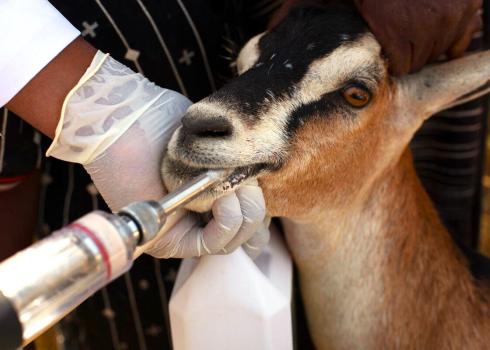
In the Southern African Development Community (SADC) region, the livestock sector contributes up to 40 percent of agricultural GDP and plays a central role in livelihoods, as well as food and nutrition security. An estimated 100 million people, 42 percent of the region’s population depend on livestock for income, food, and resilience, with women making up a significant share of smallholder farmers. Investment in this sector therefore presents a unique opportunity to lift communities out of poverty, while advancing broader development goals.
The region is richly endowed with resources for livestock production: 60 percent of SADC’s total land area is suitable for rearing livestock, and Member States collectively hold nearly 75 million cattle, 37 million sheep, 56 million goats, 15 million pigs, and over 400 million poultry (FAOSTAT, 2016). These resources position the region to meet rising global and regional demand for animal-source foods, driven by urbanization, population growth, and changing consumer preferences. However, while demand continues to expand, the full potential of livestock remains largely untapped, with only a handful of countries that include Namibia, Botswana, Eswatini, and South Africa currently accessing lucrative international export markets.
Unlocking this potential is critical for achieving multiple Sustainable Development Goals (SDGs), including poverty reduction (SDG 1), food and nutrition security (SDG 2), and gender equality (SDG 5). Yet several animal health–related constraints continue to limit productivity, competitiveness, and market access across the region. These include:
- Trade-sensitive transboundary animal diseases (TADs) such as Foot-and-Mouth Disease (FMD), Peste des Petits Ruminants (PPR), and Highly Pathogenic Avian Influenza (HPAI).
- Under-resourced veterinary services and infrastructure, alongside underdeveloped livestock value chains.
- Limited capacity for effective disease prevention, detection, control, inspection, and certification in line with international standards.
- Gaps in policy and regulatory frameworks that undermine compliance with Sanitary and Phytosanitary (SPS) requirements for safe trade.
Addressing these challenges is critical to unlocking regional and international market opportunities, ensuring safe trade in livestock and livestock products, and enabling smallholder farmers, particularly women and youth to benefit from inclusive, sustainable livestock development.
Building on STOSAR I Achievements
STOSAR II is scaling up regional efforts to strengthen animal health systems, building directly on the solid foundation established under STOSAR I. Funded by the European Union under the 11th European Development Fund (EDF 11), STOSAR I delivered important milestones that advanced veterinary capacities, improved disease preparedness, and promoted safer trade in livestock and livestock products across the SADC region.
Notable achievements included:
- Development of regional strategies for Foot-and-Mouth Disease (FMD), Peste des Petits Ruminants (PPR), and Highly Pathogenic Avian Influenza (HPAI), alongside support for national action plans.
- Strengthened coordination for disease management and regional surveillance.
- Enhanced diagnostic capacity through provision of equipment, reagents, consumables, and support for sample testing.
- Laboratory accreditation assessments and training in Quality Management Systems and risk analysis.
- Development of risk-based control strategies and epidemiological maps for PPR and HPAI.
- Support for certification of PPR historic freedom in line with global eradication efforts.
- Promotion of Commodity-Based Trade (CBT) through regional guidelines, pilot initiatives, and awareness campaigns.
- Improved Sanitary and Phytosanitary (SPS) capacities, including food safety risk analysis training, development of the SPS Annex to the SADC Protocol on Trade, and training for border inspectors.
These achievements created the platform on which STOSAR II is now building to scale up disease prevention and control, strengthen SPS compliance, and accelerate access to regional and global markets for livestock and livestock products.
Scaling Up Under STOSAR II (2024–2028)
Under the Animal Health sub component that falls under the Market Access component, STOSAR II is scaling up efforts to build on the foundations established during STOSAR I. Working in close collaboration with other project components particularly Agricultural Information Management Systems (AIMS), Value Chains and the Plant Health sub-component the project is implementing targeted activities designed to strengthen veterinary systems and facilitate regional and international market access for livestock and livestock products in the SADC Region.
Key activities include:
- Integrating the Livestock Information Management System (LIMS) to support evidence-based policymaking, emergency preparedness, planning, and decision-making.
- Domesticating regional strategies for transboundary animal diseases (TADs), updating risk maps, and implementing national strategies for the prevention, control, and management of trade-sensitive TADs.
- Supporting PPR certification and national FMD Progressive Control Pathway roadmaps.
- Facilitating cross-border coordination through surveillance, risk assessment, information sharing, and joint monitoring capacities.
- Strengthening awareness of Sanitary and Phytosanitary (SPS) regulations among value chain actors by supporting Directorate of Veterinary Services participation in SADC SPS committee meetings.
- Aligning disease control interventions by complementing FMD, PPR, and HPAI activities with CBPP and ASF control, and by advancing One Health initiatives through framework validation, awareness creation, and the establishment of regional structures.
- Enhancing laboratory capacities through the accreditation of veterinary laboratories, staff training, provision of equipment, reagents and consumables, proficiency testing, and regular lab sub-committee meetings.
- Updating and piloting guidelines for Commodity-Based Trade (CBT), with strengthened awareness, advocacy, and implementation in selected countries.
- Piloting electronic veterinary (e-Vet) certification systems at high-volume border posts to improve trade facilitation.
- Supporting Livestock Technical Committees to adopt common regional positions.
Partnerships and Collaboration
These outputs are being delivered through strong partnerships with Centres of Excellence such as Centre de coopération internationale en recherche agronomique pour le développement, (CIRAD), which leads regional laboratory capacity development, and the University of Pretoria, which spearheads CBT advancement. Strategic collaboration with the SADC Secretariat, Member State governments, and other regional and international partners ensures that interventions are aligned, sustainable, and responsive to emerging challenges.