

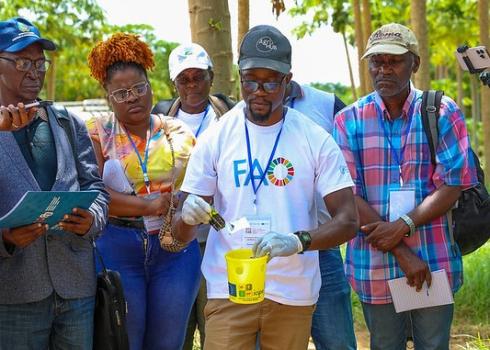
Plant health is a cornerstone of food security and market access in the Southern African Development Community (SADC) region. Healthy crops underpin household nutrition, national food supplies, and the competitiveness of agricultural trade. Yet pests and diseases continue to pose a major threat, with the Food and Agriculture Organization of the United Nations (FAO) estimating that between 20 and 40 percent of global crop yields are lost annually to pest damage, resulting in severe economic and social consequences.
In Southern Africa, recurring and emerging pest outbreaks including the tomato leafminer (Tuta absoluta), Asian fruit fly, maize lethal necrosis disease, fall armyworm, banana Fusarium wilt (Foc TR4), cassava virus diseases, and emerging threats such as Goss’s wilt undermine productivity, restrict access to regional and international markets, and increase post-harvest losses. These pressures not only reduce farmer incomes, particularly for smallholders, but also jeopardize the region’s ability to meet growing food demand and tap into expanding trade opportunities. Addressing plant health challenges is therefore critical to unlocking the full potential of SADC’s agricultural sector, ensuring food security, and facilitating safe, competitive trade in agricultural products.
Building on STOSAR I Achievements
STOSAR II is advancing regional efforts to strengthen plant health by building on the solid achievements of STOSAR I. During the first phase, the Plant Health Component supported Member States to address critical gaps in pest management and compliance with international Sanitary and Phytosanitary (SPS) standards, both of which are essential for safeguarding crops, ensuring food security, and unlocking regional and international market access.
STOSAR I key results included:
- Development of regional strategies for five priority transboundary pests: Oriental fruit fly, fall armyworm, tomato leafminer (Tuta absoluta), banana Fusarium wilt (Foc TR4), and maize lethal necrosis disease.
- Training of more than 870 technical staff from National Plant Protection Organizations (NPPOs) through Centres of Excellence.
- Provision of laboratory equipment and consumables to improve diagnostic and surveillance capacities.
- Development of national pest lists to support compliance with international export requirements.
- Strengthened surveillance, risk analysis, and risk-based pest management across Member States.
These achievements directly contributed to enhancing the competitiveness of agricultural products in the region. As a result, countries such as Botswana, Mauritius, Tanzania, Zambia, Zimbabwe, and Namibia were able to maintain or secure new access to profitable regional and international markets.
Scaling Up Under STOSAR II (2024–2028)
Building on the foundation established in Phase I, STOSAR II is scaling up regional efforts in the SADC Region to strengthen plant health and facilitate safe trade. Harmonized strategies for priority pests identified under STOSAR I will be updated and adapted to address emerging threats such as Goss’s wilt, while surveillance guidelines, tools, and protocols developed earlier will be expanded to cover newly emerging pest risks.
Planned activities under STOSAR II include:
- Strengthening Member State capacities in pest diagnostics, surveillance, early warning, and rapid response, with specific attention to the impacts of climate change.
- Supporting national laboratories with equipment, reagents, and technical guidance to improve diagnostic capability.
- Expanding the use of digital tools for real-time pest information management, early warning, and decision- making.
- Facilitating the adoption of e-Phytosanitary Certification (ePhyto GeNS) to streamline cross-border trade through secure, electronic exchange of phytosanitary certificates.
- Enhancing regional coordination to prevent and control pests, thereby improving compliance with international standards and expanding access to profitable export markets.
Through these measures, STOSAR II aims to safeguard crop production, reduce post-harvest losses, and strengthen the region’s ability to compete in both regional and global markets.
Partnerships and Collaboration
The Plant Health Sub-component engages a wide range of stakeholders. At the regional level, SADC technical committees and sub-committees, particularly the Technical Committee on Plant Protection play a critical role in guiding implementation and sustainability.
Technical services are provided by Centres of Excellence, including:
- Agricultural Research Council (South Africa)
- Centre for Agriculture and Bioscience International (CABI)National Fruit Fly Laboratory (Mozambique)
- Stellenbosch University (South Africa)
Together, these partnerships strengthen scientific and institutional capacity across all 16 SADC Member States. This sub-component contributes directly to the goals of STOSAR II by reducing crop yield losses, enhancing food security and farmer incomes, and improving compliance with SPS measures for expanded market access and trade.