

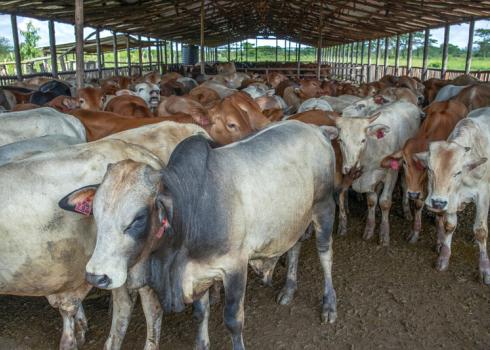
Arusha, United Republic of Tanzania – Namibia and the United Republic of Tanzania have strengthened regional cooperation on livestock movement, animal identification and traceability through a technical exchange visit aimed at improving animal health systems and facilitating safer livestock trade.
The visit brought together technical experts from Namibia and counterparts in the United Republic of Tanzania to share practical approaches for strengthening livestock movement permits, veterinary certification and traceability systems.
Supported by the European Union-funded Support Towards the Operationalization of the SADC Regional Agricultural Policy Phase II (STOSAR II) project, the exchange reflects the value of peer-to-peer learning among Southern African Development Community (SADC) Member States in addressing shared animal health and trade challenges.
“This exchange shows how practical cooperation between SADC Member States can translate regional priorities into country-level improvements. By learning from one another, countries can strengthen animal health systems, improve confidence in certification and create safer pathways for livestock trade,” said Dr Elma Zanamwe, STOSAR II Project Coordinator.
Learning from Tanzania’s experience
During the exchange, the Namibian delegation engaged with officials from the United Republic of Tanzania’s Ministry of Livestock and Fisheries to understand how permits for the movement of livestock and livestock products are issued and managed within the country and across borders.
The delegation also reviewed animal identification and traceability approaches and how these support disease control, regulatory oversight and market access.
Visits to the Northern Zone Veterinary Centre in Arusha and the Namanga border post provided practical insights into how livestock movement and certification requirements are implemented at field and border levels.
The exchange enabled participants to examine the full process, from animal identification and movement permits to veterinary oversight and border controls and identify practices that could be adapted to Namibia’s context.
For Namibia, the visit offered an opportunity to benchmark existing systems against approaches already being applied in another SADC Member State, while identifying practical lessons to inform national reforms.
Stronger systems for animal health and safe trade
Effective livestock identification, traceability and movement controls are essential for disease prevention, regulatory confidence and safe trade. They enable veterinary authorities to trace animal origins, monitor movement and respond quickly to disease outbreaks.
These capacities are particularly important in southern Africa, where transboundary animal diseases can affect livestock productivity, restrict movement and disrupt access to domestic, regional and international markets.
Reliable certification and traceability systems can improve disease surveillance, strengthen confidence in veterinary controls and help livestock producers and traders meet sanitary requirements.
STOSAR II supporting regional cooperation
The exchange contributes to the objectives of STOSAR II, implemented by the Food and Agriculture Organization of the United Nations (FAO) in partnership with the SADC Secretariat and SADC Member States, with funding from the European Union.
Under its Animal Health component, the project supports Member States to strengthen prevention, surveillance and control of priority transboundary animal diseases, while improving compliance with sanitary and phytosanitary requirements.
This includes support for stronger veterinary capacities, improved certification systems, animal identification and traceability, and greater exchange of animal health information across borders.
By enabling countries to share tested approaches and adapt good practices to their national circumstances, knowledge exchanges complement technical interventions and support more coordinated regional responses.
Lessons from the Namibia–United Republic of Tanzania exchange are expected to inform Namibia’s ongoing efforts to improve the efficiency, transparency and reliability of livestock movement and certification systems.
Turning regional knowledge into national action
As SADC Member States seek to expand livestock trade while managing animal health risks, efficient certification, traceability and movement-control systems will remain critical.
The exchange highlighted the need to connect digital and regulatory improvements with strong veterinary institutions, clear procedures, trained personnel and effective coordination among institutions responsible for animal health, trade and border management.
For livestock keepers and traders, stronger systems can contribute to more predictable movement of animals and livestock products, improved disease protection and greater confidence in market access.
Through STOSAR II, the European Union, FAO, the SADC Secretariat and Member States are promoting regional knowledge exchange as part of broader efforts to strengthen animal health systems and facilitate safe agricultural trade.
By sharing experience and adapting successful approaches across borders, Namibia and the United Republic of Tanzania are demonstrating how cooperation can turn regional commitments into practical improvements for livestock sectors and more resilient agrifood systems across southern Africa.