

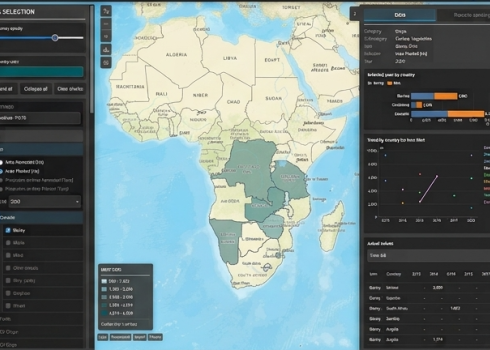
Gaborone, Botswana - The SADC Agricultural Information Management System (AIMS) is being upgraded to AIMS v2 to provide Member States with a more efficient, accessible and user-friendly platform for managing and using agricultural information.
The platform brings together agricultural information from all 16 SADC Member States and supports access to data that can inform planning, reporting and decision-making across the region.
AIMS currently includes 12 thematic modules covering crops, livestock, aquaculture and fisheries, forestry, agricultural inputs, socioeconomics, and land cover and use. Users can view country-level information, explore maps and visualizations, and download datasets for analysis and decision-making.
The upgraded version will retain these core functions while improving platform design, functionality, performance, accessibility and scalability. It will also strengthen data integration and interoperability with national systems, including Laboratory Information Management Systems and Early Warning Systems.
Following the engagement of an information technology developer, the upgrade has moved into the prototype development phase. The AIMS v2 prototype is expected to be shared with Member States for testing and feedback in September 2026.
Feedback from Member States will help refine the platform ahead of wider deployment and ensure that AIMS v2 responds to practical country needs and regional priorities.
In addition, enhanced analytical capabilities are expected to support more effective interpretation and use of agricultural data, contributing to evidence-based planning, early action and more informed decision-making for agriculture and food systems in Southern Africa.
The upgrade is being implemented through close collaboration between FAO, SADC, the IT developer and SADC Member State focal points. This partnership approach will help ensure that the enhanced platform remains a trusted and useful resource for agricultural information management in the region.