

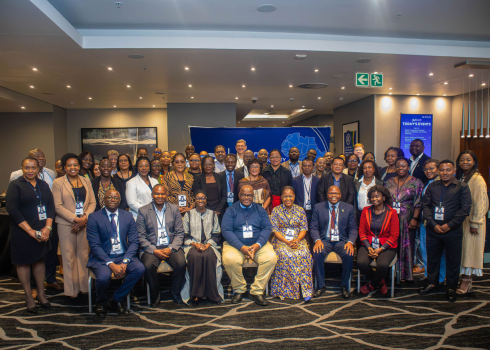
Johannesburg, South Africa - The Southern African Development Community (SADC) Secretariat in partnership with the Food and Agriculture Organization of the United Nations (FAO), UNICEF, WHO and regional technical and development partners, convenes a three-day technical validation workshop for the SADC Food and Nutrition Security Strategy (FNSS) 2026–2036, taking place from 14 to 16 September 2026 in Johannesburg, South Africa.
The workshop brings together senior food and nutrition security experts from SADC Member States, the SADC Secretariat, FAO, United Nations agencies, development and financing partners, academia and other technical institutions to review and strengthen the draft Strategy and build consensus around priority recommendations for its finalization.
Responding to regional challenges
The validation takes place as Southern Africa faces interconnected pressures from poverty and inequality, high food prices, climate shocks, market disruptions and food-system weaknesses. The region is also grappling with the triple burden of malnutrition: undernutrition, micronutrient deficiencies, and rising overweight and obesity. Healthy diets remain unaffordable for many households, while droughts, floods, cyclones, plant and animal pests, and disease outbreaks continue to threaten livelihoods, agricultural production and food systems.
Building on experience and aligning with continental ambition
The draft Strategy builds on the SADC Food and Nutrition Security Strategy 2015–2025 and incorporates lessons from its review, the regional situation analysis, Member State consultations and stakeholder inputs. It carries forward gains in policy development and multisectoral coordination while responding to persistent gaps in financing, implementation, harmonisation, data and accountability.
It is aligned with global and regional frameworks including the Africa Regional Nutrition Strategy 2026–2035 and the African Union’s CAADP Kampala Declaration on Building Resilient and Sustainable Agrifood Systems in Africa, together with the CAADP Strategy and Action Plan 2026–2035. These frameworks promote a comprehensive agrifood-systems approach integrating nutrition, climate resilience, inclusion, trade, investment and accountability.
FAO advancing resilient agrifood systems, food and nutrition security across Southern Africa
FAO has long supported SADC and its Member States in advancing resilient, inclusive and sustainable agrifood systems that improve food security, nutrition and livelihoods across Southern Africa. Through technical assistance, policy support, capacity development, evidence generation, innovation and strategic partnerships, FAO works with governments and regional institutions to address the interconnected challenges affecting food systems, nutrition, agriculture, resilience and sustainable development.
As part of this broader commitment, FAO is supporting the development and validation of the SADC Food and Nutrition Security Strategy 2026–2036. Through the European Union-funded Strengthening the Operationalization of the SADC Regional Agricultural Policy Phase II (STOSAR II) project, FAO has provided technical support for the review of the previous Strategy, the regional situation analysis, Member State and stakeholder consultations, and the development of the draft Strategy and its implementation, financing and results frameworks.
“FAO remains committed to supporting SADC and its Member States to strengthen food and nutrition security through technical assistance, policy support, innovation, capacity development and partnerships. We stand ready to work with SADC in transforming food systems for healthier, more resilient and prosperous communities across Southern Africa”, stresses Dr Patrice Talla, FAO Subregional Coordinator for Southern Africa.
The validation is more than endorsement of a document. It provides an opportunity to confirm regional priorities, sharpen outcomes and interventions, clarify responsibilities between regional and national levels, and ensure that implementation arrangements are measurable and adequately financed. The Strategy’s value will ultimately be determined by Member State ownership, effective coordination, sustainable financing, policy coherence, monitoring and mutual accountability.