

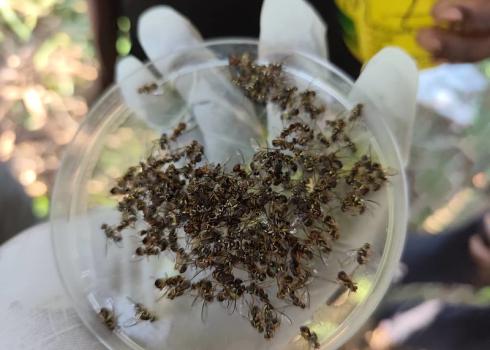
Aussenkehr, //Karas Region – Namibia has taken a major step toward protecting its horticultural sector and expanding international market opportunities through a capacity-building workshop on fruit fly management and agricultural market access.
The training, held in Aussenkehr along the Orange River, brought together government officials, technical experts, horticultural exporters and development partners to strengthen national systems for fruit fly surveillance, pest management and phytosanitary compliance. The workshop is implemented under the EU-funded STOSAR II project in collaboration with the Food and Agriculture Organization (FAO) and the Southern African Development Community (SADC).
Mr. Ferdinard Mwapopi, speaking at the opening of the workshop on behalf of the interim FAO Representative in Namibia, Mr. Patrice Talla, emphasized that strong pest management systems are essential for protecting agricultural production and ensuring Namibia can access global markets.
“Early detection, coordinated surveillance and integrated pest management are essential not only to protect crops, but also to improve yields, ensure compliance with phytosanitary requirements and expand access to regional and international markets,” Mr. Talla noted.
Fruit flies, particularly invasive species such as the Oriental fruit fly (Bactrocera dorsalis), are among the most destructive pests affecting horticultural crops across Southern Africa. These pests cause crop losses, increase production costs and trigger strict phytosanitary requirements from importing countries, making effective management critical for countries seeking to export fresh produce.
Speaking on behalf of the Ministry of Agriculture, Fisheries, Water and Land Reform, Deputy Director, Mr. James Nzehengwa highlighted the growing threat posed by fruit flies to Namibia’s agricultural sector.
“Fruit flies, particularly invasive and highly destructive species such as the Oriental fruit fly (Bactrocera dorsalis), continue to pose serious challenges to agricultural productivity and trade across the SADC region,” he said.
He further noted that the pest poses a significant risk to Namibia’s table grape industry along the Orange River, one of the country’s most important horticultural export sectors.
“The impact of this pest extends beyond the field, affecting compliance costs and presenting a significant phytosanitary barrier that limits access to lucrative markets. For Namibia, effective management of these risks is not only a plant health priority, but also a strategic trade and economic imperative.”
The Head of Cooperation at the European Union Delegation to Namibia, Alexandre Baron, said strengthening phytosanitary systems is key to unlocking agricultural trade opportunities.
“Fruit flies pose serious risks to horticultural production and to Namibia’s export ambitions. They increase production costs, cause yield losses and trigger stringent phytosanitary requirements from trading partners,” he said.
“Effective management of these pests is therefore not only a technical necessity, it is an economic imperative.”
Over the course of the workshop, participants discussed key components of the market access process, with a strong focus on the principles and practical application of Pest Risk Analysis for market access (PRA). The sessions also examined fruit fly risks, including species identification, effective management strategies, and developing national fruit fly action plan.
Participants emphasized the need to strengthen surveillance systems, enhance diagnostic capacity, and improve coordination among regulatory authorities, research institutions, and private sector stakeholders. These efforts are essential for building robust phytosanitary systems and supporting the country’s ability to access and compete in export markets.
By strengthening fruit fly management and phytosanitary systems, Namibia is positioning itself to protect its crops, safeguard farmer incomes and expand access to high-value horticultural markets across the region and globally.