

Johannesburg, South Africa – Member States of the Southern African Development Community (SADC) have validated four Sector Development Plans (SDPs) covering cotton, wheat, rice and soybean, together with SADC Regional Guidelines for Smallholder Farmer Aggregation and an African Continental Free Trade Area (AfCFTA) Gap and Barrier Assessment Study.
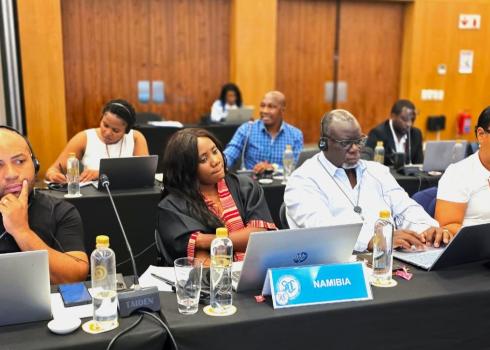
The instruments were reviewed at a regional validation workshop held from 20 to 22 October 2026 in Johannesburg under the European Union-funded Support Towards the Operationalization of the SADC Regional Agricultural Policy (STOSAR II) project. Implemented by the Food and Agriculture Organization of the United Nations (FAO) in partnership with the SADC Secretariat, the workshop brought together 60 delegates from ministries responsible for agriculture, trade, commerce and industry across 15 Member States, as well as regional farmer organizations, including the Southern African Confederation of Agricultural Unions (SACAU), development partners and donors.
Advancing regional agricultural value chains
Participants reviewed and validated three complementary sets of instruments designed to move regional agricultural priorities towards investment and implementation:
1. Sector Development Plans for cotton, wheat, rice and soybean, which identify opportunities to strengthen production, agro-processing, value addition and investment in four priority commodities.
2. SADC Regional Guidelines and Regulatory Frameworks for Smallholder Farmer Aggregation and Rural Agro-Industrial Investment Plans, aimed at improving farmers’ access to markets and creating a more enabling environment for agro-industrial investment.
3. AfCFTA Gap and Barrier Assessment Study, which identifies policy, regulatory and institutional constraints affecting agricultural trade and highlights opportunities to deepen regional market integration.
The validation process identified priorities for strengthening the instruments before implementation. For the SDPs, stakeholders recommended making productive use of existing land, irrigation systems, mills, crushers and ginneries before expanding capacity. They also called for production interventions to be linked more clearly to aggregation, processing, standards, trade corridors and credible buyers, with pilots scaled up only after meeting agreed performance and investment-readiness thresholds.
Discussions on smallholder farmer aggregation underscored the need for commercially viable models backed by suitable finance, sound governance, quality assurance and reliable market demand. Participants also highlighted the importance of reducing trade barriers so that agricultural producers and businesses can take fuller advantage of opportunities under the AfCFTA.
These recommendations will inform the finalization of the instruments and help translate regional priorities into practical investment and implementation strategies.
Strengthening partnerships for agricultural transformation
Opening the workshop, Dr Patrice Talla, FAO Subregional Coordinator for Southern Africa, emphasized the importance of connecting agricultural production to markets and investment opportunities.
“Agriculture remains central to Africa’s economic transformation. Our shared task is not only to increase production, but also to connect farmers to markets, strengthen agro-processing, encourage responsible investment and facilitate regional trade,” Talla said.
The workshop marked an important milestone for the Value Chains component of STOSAR II. Building on the Market Access component of STOSAR I, the second phase takes a more integrated approach by linking production with farmer aggregation, agro-processing, investment and regional trade.
Representing the SADC Secretariat, Mr Fahari Marwa, Director of Food, Agriculture and Natural Resources (FANR), emphasized the importance of strengthening regional agricultural production and retaining more value within Southern Africa.
“For SADC, these priorities speak directly to our ambition to increase agricultural productivity, expand agro-processing and retain more value within the region. Stronger links between farmers, processors, investors and markets can create jobs, improve incomes and contribute to food security,” Marwa said.
He also highlighted the importance of addressing infrastructure and institutional constraints while expanding opportunities for smallholder farmers, particularly women and young people.
Speaking on behalf of the European Union, Ms Eva-Maria Engdahl, Team Leader, Transformation Section, Regional Partnerships Unit, Delegation of the European Union to South Africa, underscored the importance of responsible investment and climate resilience in agricultural development.
She called for agricultural value chains that are “attractive to responsible investment” and “resilient to a changing climate”.
The European Union's support to STOSAR II contributes to efforts to promote sustainable agricultural development and regional economic integration, complementing opportunities under the AfCFTA and the EU–SADC Economic Partnership Agreement.
Translating validation outcomes into action
Closing the workshop, Calicious Tutalife, SADC Secretariat Senior Programme Officer for Value Chains, urged Member States to move beyond viewing one another as trade competitors and instead build on their complementary strengths.
“Rather than restricting imports to stimulate domestic production, Member States should identify their respective competitive strengths and work together to retain more value within the region. Regional import substitution depends on pooling resources, processing raw materials within SADC and easing unnecessary cross-border trade restrictions. More harmonized technical regulations and policies will help local agrifood businesses reach the scale needed to compete successfully with multinational suppliers,” Tutalife said.
Dr Elma Zanamwe, STOSAR II Project Coordinator, said the validation had established a strong basis for action, while stressing that the instruments now need to be sharpened into practical, finance-ready plans.
“The Sector Development Plans provide a credible technical foundation for transforming priority value chains. The next step is to strengthen the evidence base, clarify market linkages, define viable financing arrangements and establish robust accountability mechanisms. This will help turn the plans into investable, implementation-ready programmes that deliver measurable benefits for farmers, agribusinesses and the wider regional economy,” Zanamwe said.
The immediate next steps are to incorporate the workshop recommendations, refine investment priorities and strengthen coordination among Member States, the SADC Secretariat and regional partners.
Through STOSAR II, FAO and the SADC Secretariat will continue to support Member States in translating the validated instruments into practical measures that strengthen value chains, expand market access, mobilize investment and advance regional agricultural trade.