

Angola - Fruit flies pose an ongoing and growing threat to southern Africa's horticultural sector, particularly in Angola, where high-value crops such as mangoes, citrus, and avocados support livelihoods, food security, and exports. The invasive Oriental fruit fly (Bactrocera dorsalis) has caused significant yield losses, higher production costs, and stricter phytosanitary measures, affecting Angola’s market access and competitiveness.
To strengthen national surveillance and response systems for fruit fly infestations, the Food and Agriculture Organization of the United Nations (FAO), in collaboration with the Government of Angola, organized a technical workshop on fruit fly surveillance, identification and integrated pest management, under the second phase of the European Union funded project “Support Towards the Operationalisation of the SADC Regional Agricultural Policy (STOSAR II)” .
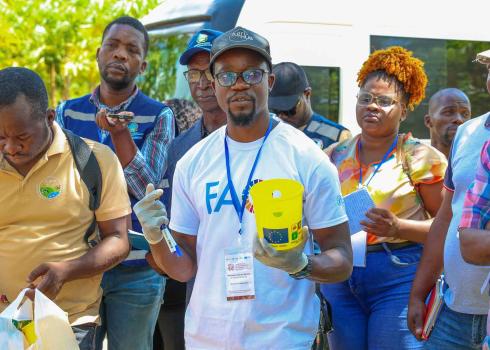
The workshop convened 20 plant protection technicians made up of staff of National Plant Protection Organization (NPPO), and the private sector (fruit producing and exporting companies) to enhance the national capacity. The initiative aimed to translate regional commitments into practical actions at the country level.
A central objective of the STOSAR II Fruit Fly capacity building training, which included a field demonstration, is to enhance national capacity for surveillance, early detection, risk assessment, and coordinated response, key elements for safeguarding horticultural production and maintaining compliance with international phytosanitary standards.
The training supports the implementation of regional plant health strategies by aligning Angola’s frameworks with SADC and FAO guidelines. Participants learned standardized protocols for fruit fly trapping, monitoring, and identification, focusing on validated pheromone-based lures, georeferenced data systems, and establishing a national fruit fly surveillance network, a vital component of FAO’s recommended strategy, to enable early detection and swift outbreak response.
Presenting an overview of the STOSAR project in Angola, Miguel Watanga indicated that the capacity-building initiative marks a significant step as the first STOSAR II activity in Angola following the national project launch in December last year. He reaffirms FAO and Angola’s commitment to strengthening phytosanitary systems in accordance with FAO and SADC standards, laying the groundwork for expanded trade and improved farmer resilience.
The European Union’s Manager of Health, Circular Economy, and the Environment in Angola, Mr Pierre Destexhe, highlighted the importance of increased collaboration and funding. He stressed that surveillance and management standards are essential not only for crop protection but also for boosting yields, meeting international phytosanitary requirements, and opening up new market opportunities.
Strengthening Fruit Fly Surveillance and Trade Readiness in Angola
To support these efforts, the STOSAR II project has started procuring fruit fly traps and lures. This will facilitate the implementation of a pilot surveillance system, allowing for early pest detection, coordinated management, and potential expansion to the national level.
Building on the harmonized regional strategies developed under STOSAR I with FAO support, STOSAR II turns regional commitments into concrete country-level actions that strengthen national institutions and benefit producers and exporters. Angola’s NPPO has shown leadership by requesting FAO assistance to implement the regional fruit fly strategy nationally. This workshop represents a long-term investment in phytosanitary capacity, trade facilitation, and food security.
FAO reiterates its commitment to working closely with the Government of Angola, the SADC Secretariat, farmers, private sector actors, and development partners to drive sustainable horticultural production and strengthen the region’s trade competitiveness in line with international standards.