

Maputo, Mozambique - How much food is available for consumption in Mozambique? Which foods contribute most to the national diet? How dependent is the country on food imports? These are some of the key questions that Food Balance Sheets (FBS) help answer. By bringing together data on agricultural production, trade, stocks and utilization, Food Balance Sheets provide a comprehensive picture of the country's food supply and utilization which support evidence-based decision-making for food security, nutrition and agricultural development.
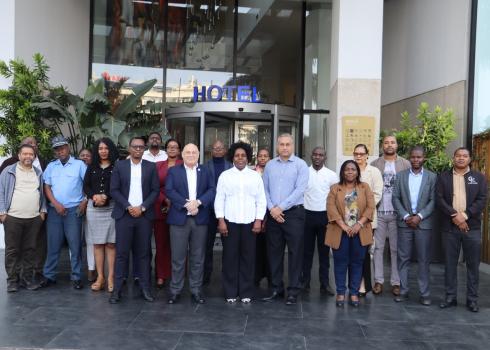
To strengthen national capacity in this important area, the Food and Agriculture Organization of the United Nations (FAO) through the implementation of STOSAR II Project, in collaboration with the Southern African Development Community (SADC) Secretariat Regional Statistics Unit, and the Government of Mozambique through the Technical Secretariat for Food and Nutrition Security (SETSAN), organized a Food Balance Sheets Training and Compilation Workshop in Maputo from 13 to 24 July 2026. The workshop brought together members of Mozambique's National Food Balance Sheets Technical Working Group (TWG), comprising experts from institutions responsible for agriculture, statistics, food security, nutrition, trade, customs, research and academia.
A Strong Partnership for Better Food Statistics
During the opening session, the Director of Food Security and Nutrition at SETSAN welcomed participants and thanked the representatives of the various institutions for their commitment to the national Food Balance Sheets initiative. The Director also acknowledged the long-standing collaboration between the Government of Mozambique, FAO and SADC in strengthening agricultural and food security statistics and encouraged participants to fully engage in the training to ensure the sustainability of Food Balance Sheets production in the country.
The FAO Representative in Mozambique commended the strong collaboration among national institutions and development partners in promoting evidence-based planning and policymaking. The Representative emphasized that Food Balance Sheets are more than a statistical exercise; they are an essential tool for informing agricultural, food security and nutrition policies. Participants were encouraged to actively contribute throughout the workshop, acquire practical skills and apply the knowledge gained to support the regular production of high-quality Food Balance Sheets in Mozambique.
Why Food Balance Sheets Matter
Food Balance Sheets are among the most important tools used to understand a country's food system. They provide detailed information on the supply and utilization of food commodities by accounting for production, imports, exports, stock changes, feed, seed, processing, losses and food available for human consumption. Through this process, Food Balance Sheets generate valuable indicators on per capita food availability, dietary energy supply, protein and fat availability, as well as other nutritional and food security indicators.
Food Balance Sheets also produce strategic indicators such as the Import Dependency Ratio and the Self-Sufficiency Ratio, allowing governments to assess vulnerabilities in food supply chains and monitor progress toward greater food security. These statistics provide critical evidence for designing and evaluating policies related to agriculture, trade, nutrition, food systems transformation and resilience.
Towards Sustainable Food Balance Sheets in Mozambique
The workshop marks an important milestone in strengthening Mozambique's agricultural and food statistics system. Beyond building the technical capacity of national experts, the initiative has reinforced institutional collaboration among key data producers and users involved in food security, nutrition, agriculture and trade statistics. Through the National Technical Working Group, Mozambique is laying the foundation for the regular and sustainable production of Food Balance Sheets in line with international standards.
A major achievement of the workshop was the successful compilation and validation of preliminary Food Balance Sheets results for recent reference years using the updated FAO Supply Utilization Accounts (SUA) and Food Balance Sheets methodology. Working collaboratively with national datasets, members of the national TWG reviewed production, trade, stocks and utilization data, identified and resolved key imbalances, and generated the main Food Balance Sheets outputs and indicators. These results provide valuable insights into national food availability, dietary energy supply, protein and fat availability, as well as the country's food import dependency and self-sufficiency levels.
The next phase of the initiative will focus on preparing a comprehensive analytical Food Balance Sheets report for Mozambique, with particular emphasis on the 2023, 2024 and 2025 reference years. The report will document the entire compilation process, including data sources, methodological approaches, assumptions adopted during balancing exercises, and key analytical findings emerging from the Food Balance Sheets results. In addition, it will present statistical tables, graphs and interpretations of major food security and nutrition indicators.
The report is expected to serve a dual purpose. First, it will act as a practical reference document for members of the National Technical Working Group and future Food Balance Sheets compilers, thereby supporting knowledge retention, capacity development and institutionalization of the process. Second, it will provide policymakers, planners and development partners with evidence-based information to support decisions related to food security, nutrition, agricultural production, trade and the transformation of Mozambique's agri-food systems. By strengthening both technical capacity and the use of data for decision-making, the Food Balance Sheets initiative is contributing to a more informed and resilient food system in Mozambique.