

Zambia is making significant progress in strengthening agricultural governance, plant health regulation and data-driven decision-making through the European Union-funded Support Towards Operationalisation of the Strategic Plan and Transition to Sustainable Agricultural Transformation and Institutional Reform (STOSAR II) Project.
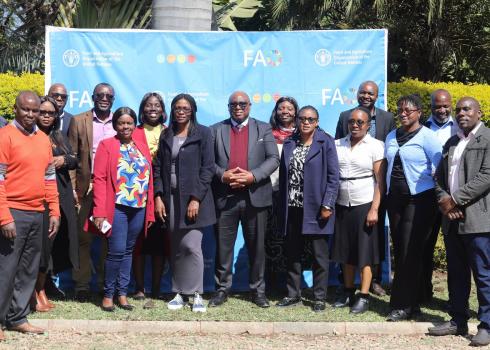
Implemented with support from the Food and Agriculture Organization of the United Nations (FAO), the project recently facilitated two technical workshops in Kafue that brought together government representatives and key stakeholders to advance regulatory reforms and improve agricultural information management systems.
Progress on Plant Health Regulations
A major outcome of the workshops was the finalisation of the Regulatory Impact Assessment (RIA) for the draft regulations under Zambia's Plant Health Act No. 1 of 2025.
The assessment represents an important step towards operationalising the country's modernised phytosanitary framework. By evaluating the expected impact of the proposed regulations, the RIA will help ensure that implementation is based on evidence and risk analysis. This approach is expected to strengthen plant health protections while facilitating safe and efficient agricultural trade.
The development of a robust regulatory framework is critical for safeguarding crops from pests and diseases, improving market access and supporting Zambia's broader agricultural transformation agenda.
Strengthening Agricultural Information Systems
Alongside regulatory reforms, the workshops focused on enhancing Zambia's agricultural information management capacity through the Agricultural Information Management Systems (AIMS) Component of the STOSAR II Project.
Stakeholders worked to strengthen the National AIMS Technical Committee and the Technical Working Group, while conducting an assessment of the Zambia Integrated Agricultural Management Information System (ZIAMIS).
Discussions centred on improving the quality and reliability of agricultural data, enhancing interoperability between information systems and harmonising key indicators used across the sector. Participants also explored ways of strengthening the application of digital technologies to support agricultural planning, monitoring, reporting and evidence-based policymaking.
Improved agricultural information systems are expected to enhance decision-making processes, enabling policymakers and stakeholders to respond more effectively to emerging challenges and opportunities within the sector.
Supporting Sustainable Agricultural Transformation
Held in Kafue from 13 to 17 July 2026, the workshops reinforced Zambia's commitment to building resilient agricultural institutions, modernising information systems and creating an enabling policy environment for sustainable agricultural development.
Through the EU-funded STOSAR II Project, FAO continues to support the Government of Zambia in strengthening policies, improving data systems and enhancing institutional capacity. These efforts are expected to contribute to a more efficient, resilient and sustainable agricultural sector capable of driving long-term food security, economic growth and rural development.